
Research Operations Case Study
Scaling research for 300+ Designers
Research Ops
My Contribution
Research Ops Strategy
Interactive Workflows
Governance
Pilot Testing
My Role
Consultant: UX Strategy & Ops
Project Focus
Engineering a self-service ecosystem for 300+ designers across a massive digital ecosystem.
Primary Goal
To eliminate 'Knowledge Debt' and standardize research artifacts across a massive digital ecosystem.
Key Outcomes
Reduction in 'Time-to-Insight'
Annual Design Hours Saved
Organization-wide Adoption Rate
Strategic Gap Analysis
Our evaluation identified critical friction points that hindered operational velocity.
- •
User: Designers faced 'Analysis Paralysis' and manual friction when choosing research methods.
- •
Business: High 'Knowledge Debt' and redundant costs ($250k+) due to siloed data.
- •
Internal: Lack of a unified, searchable repository across the Jio digital project ecosystem.
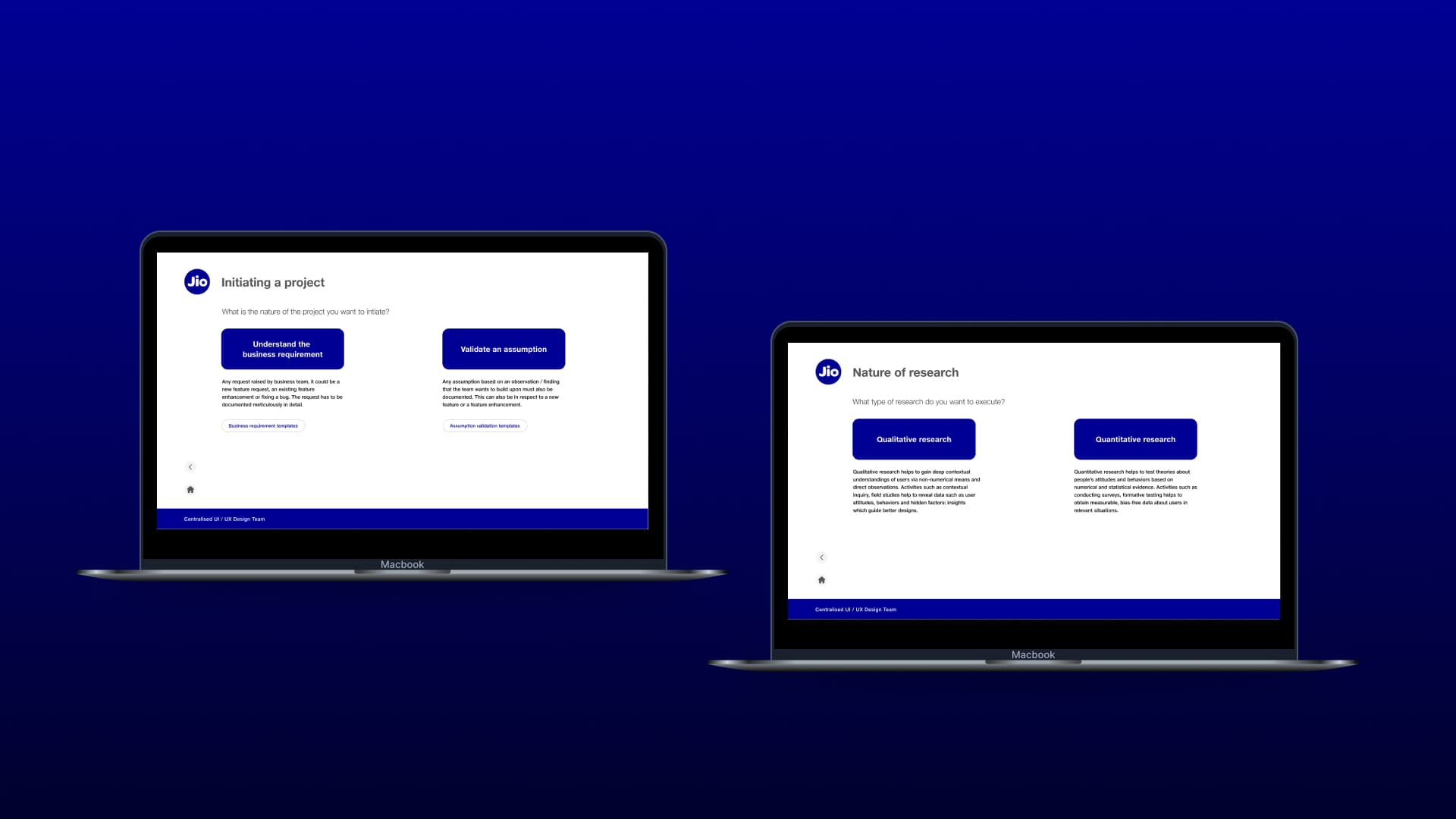
The Logic-Gate Flow (Cognitive Load)
- •
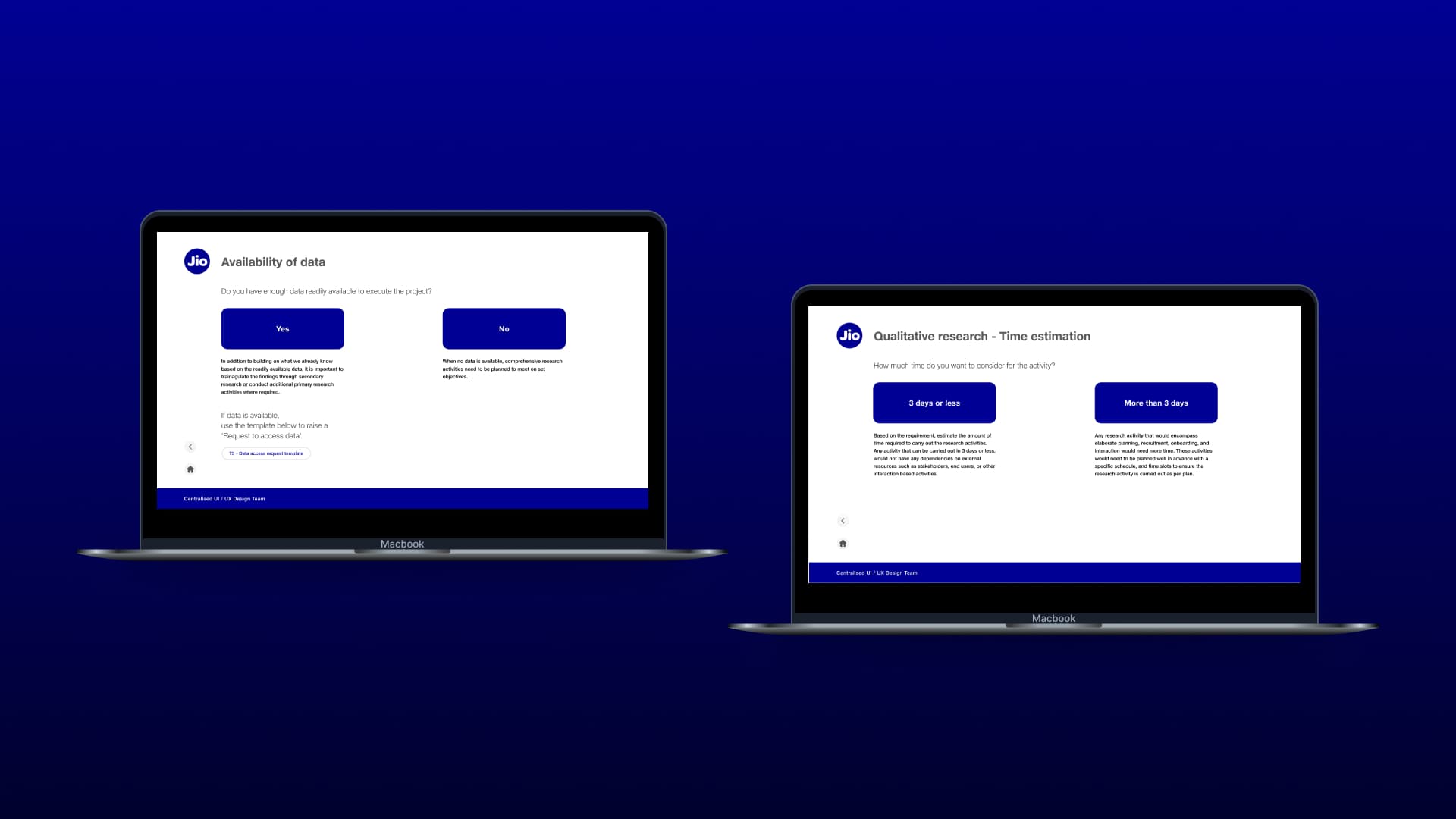
Design Solution: We designed a 'logic-gate' interface that reduced cognitive load, guiding designers from 20+ methods to the top 3 relevant choices in under 2 minutes.
- •
Decision Velocity: This intervention resulted in a 65% reduction in decision time for research planning.
Systemic Quality (Master Templates)
- •
Standardization: Developed interactive 'Stakeholder-Ready' templates to ensure 100% brand and data consistency across all 300+ designers.
- •
Consistency: Automated templates eliminated manual errors, ensuring that every insight followed organizational standards.
Scaling (Automated Mentor)
- •
Onboarding Efficiency: Reduced onboarding from 3 days to 2 hours using the 'Automated Mentor' guide for new hires.
- •
Knowledge Scaling: The self-service guide allowed the research team to scale support without proportional headcount growth.
Quantifiable Impact
0
Reduction in 'Time-to-Insight'
Achieved through standardized logic-gates and templates.
0
Annual Design Hours Saved
Direct impact on organizational velocity and resource allocation.
Key Learnings & Reflection
- •
Governance as Enabler: Standardization is not about restriction; it is about providing the guardrails that allow designers to move faster with higher confidence.
- •
Infrastructure for Impact: The most powerful research tools are those that integrate seamlessly into existing design workflows.
- •
Data Democracy: Making research searchable transforms it from a one-time project artifact into a living business asset.

Industrial UX Audit
you made it to the end of the scroll! Let's discuss the project in detail.